
A failed inspection often gets blamed on the tools being used.
Missing data. Incomplete checklists. Reports that don’t match what happened on site.
It looks like a system issue. It rarely is.
The problem usually sits in how the surveying app is being used.
What is a quality control app supposed to do?
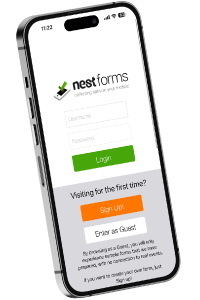
The NestForms Quality Control App is used to record, inspections, project completion reports, track issues, and generate checklists.
It replaces paper forms with structured digital checklists.
Teams use it to:
- Log defects and snags
- Capture photos and notes
- Record pass or fail outcomes
- Produce inspection reports
The app itself is not making decisions. It only records efficiently what users input.
Where do things actually go wrong?
Most issues happen before the report is created.
1. Inconsistent data entry
Different inspectors record the same issue in different ways.
One writes “crack in wall.”
Another writes “minor plaster defect.”
Reports become inconsistent and hard to compare.
2. Poorly structured forms
If the form is unclear, the data will be unclear.
Common problems include:
- Too many open text fields
- No required fields
- No standard options (pass/fail, severity)
This leads to gaps in reports.
3. Lack of process, not lack of software
Teams often assume the app will fix workflow issues.
It won’t.
If inspections are rushed or unclear, the app simply records that confusion.
4. No clear ownership of checks
Who signs off each stage?
If that’s not defined, tasks get skipped.
A quality control checklist app works best when responsibilities are fixed.
How does this affect your reports?
The final report reflects the process behind it.
If inputs vary, reports become unreliable.
What you might see:
- Missing inspection steps
- Duplicate or unclear issues
- No clear priority or severity
- Reports that need manual correction
This slows down the project completion form process.

How should a quality control app be used?
The app should support a defined workflow.
Not replace one.
Step 1: Standardise your inspection forms
Use clear, structured fields:
- Dropdowns instead of free text
- Required fields for key checks
- Consistent defect categories
This keeps data uniform across all users.
Step 2: Define who does what
Assign responsibility at each stage:
- Initial inspection
- Follow-up checks
- Final sign-off
A project management form should reflect this flow.
Step 3: Use real-time validation
Don’t wait until the report is finished.
Use rules such as:
- Mandatory photos for failed issues
- Required comments for defects
- Automatic flags for incomplete sections
This reduces rework later.
Step 4: Keep reports automatic
A good quality control checklist app should generate reports instantly.
No manual editing.
No reformatting.
The output should match the data collected.
What does a working setup look like?
A site team uses a mobile form app for daily inspections.
Each inspector follows the same checklist.
They select from predefined options instead of typing everything.
Photos are required for failed checks.
At the end of the inspection:
- The report is created automatically
- Issues are clearly categorised
- Follow-up actions are assigned immediately
No chasing. No confusion.
When is the app actually the problem?
It happens, but less often than expected.
The app may be limiting if:
- It cannot enforce required fields
- It doesn’t support structured data
- Reports need constant manual editing
- It cannot work offline on site
In those cases, switching to a better quality control app makes sense.

It’s easier to blame software than process.
But changing apps without fixing workflow leads to the same problems again.
The key question is:
Is the issue in the tool, or how it’s being used?
What should you fix first?
Start with the basics:
- Standardise your forms
- Define responsibilities
- Remove unnecessary text fields
- Make key steps mandatory
Once that is in place, the app will start working as expected.
Final thoughts
A quality control app reflects your process.
If the process is unclear, the output will be too.
Fix the workflow first. The reports will follow.
Have a look at these Quality Control Inspection and Health and Safety Audit template example forms from the NestForms form builder app library. You can find many other example forms, you can use as they are or modify them to suit your requirements.
If you would like to learn more about quality control, check out our blog on punchlist forms.
The best surveyor apps should include all of the key features. Try one of the most flexible apps for surveyors available today. NestForms also works as a land survey app, punch list app or snag list app for collecting field data.
We also offer a free Training Demo as an introduction to the platform if you need it. For larger operations we also provide more detailed Assisted Onboarding.
Trial nestforms with one of our templates such as the work completion form or the work completion report along many others, that can be tailored to meet your needs.
Start your NestForms GPS survey app journey today and sign up for the free two week trial. You can review and test all of the features available to Premium plan users during this period.