
In this current age of technology, the widespread availability of mobile apps and cloud software, it may come as a surprise to you that many field teams still rely on paper to record inspections, complete checklists, capture signatures, and document completed work.
Digital forms can reduce administration, improve accuracy, and make information available instantly. Yet paper remains common across construction, maintenance, utilities, surveying, inspections, facilities management, and many other field-based industries.
The reason is rarely that organisations prefer paper. More often, it is because moving away from established processes feels difficult or risky.
Understanding why paper remains so common is the first step towards replacing it with something better.
Why do field teams still rely on paper?
There is rarely a single reason. Instead, several practical concerns combine to make paper seem like the safest option.
Some of the most common reasons include:
- Existing paper forms already work well enough.
- Workers are familiar with paper processes.
- Mobile signals are unreliable.
- Extensive training requirements.
- Different teams use different forms.
- There are concerns about implementation costs.
When viewed individually, these reasons are understandable. Together, however, they often create hidden costs that become larger over time. As we have mentioned in previous blogs, paper is not always the enemy in the eyes of companies looking to keep costs low.
Paper creates work that nobody notices
A paper form does not end when someone writes the final answer. It often continues through different departments in the workplace, for a longer amount of time than necessary which can be improved by a few smooth transitions to digital data collection.
Someone usually has to:
- Collect completed paperwork.
- Check handwriting.
- Enter information into another system.
- File documents.
- Chase missing pages.
- Contact workers to clarify answers.
- Scan or photocopy records.
- Search for documents weeks or months later.
These small administrative tasks are repeated every day across every project.
Individually they seem insignificant. Collectively, they consume many hours every week.
Delays affect everyone
Paper slows down more than administration. Managers often have to wait until staff return to the office before they know:
- Whether work has been completed.
- If defects have been found.
- Whether additional materials are required.
- If a customer signed the paperwork.
- Which jobs remain outstanding.
Without even knowing it, decisions are delayed.
This can affect scheduling, customer communication, invoicing, compliance reporting, and project planning. Digital data collection allows us to send results whenever and wherever we are.

Offline working is still misunderstood
One of the biggest reasons field teams still rely on paper is the belief that mobile software requires an internet connection.
For many years that was true.
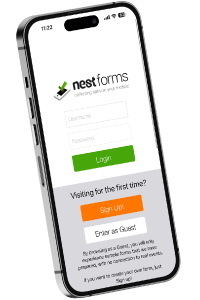
Today, however, modern field management systems such as NestForms apple and android forms app allow forms to work completely offline.
Users can:
- Complete inspections without signal.
- Capture images.
- Record GPS locations.
- Collect signatures.
- Add notes.
- Complete entire new build snagging checklists.
Everything is stored securely on the device and automatically synchronises once a connection becomes available with a gps land survey.
For teams working in remote locations, basements, plant rooms, rural areas, or new construction sites, offline capability removes one of the biggest historical barriers to digital working with our gps survey app NestForms.
Paper makes quality harder to maintain
Paper forms depend heavily on individual users remembering what needs to be recorded.
Questions may be skipped, handwriting may be unclear, photographs may be forgotten, health concerns could arise and important information might be left behind.
Digital forms help standardise inspections by ensuring everyone follows the same process.
Required questions, validation rules, mandatory photographs, and automatic calculations all help produce more consistent results.
Compliance becomes easier with digital records
Many industries require detailed records that remain accessible long after work has finished.
Finding a paper inspection completed several years ago can become difficult.
Digital records are considerably easier to search.
Organisations can quickly locate responses by:
- Customer
- Site
- Project
- Date
- Inspector
- Asset
- Reference number
This becomes particularly valuable during audits, customer queries, warranty claims, and regulatory inspections.
Digital adoption doesn't need to happen overnight
One reason organisations delay moving away from paper is the belief that everything must change at once.
In reality, most successful implementations begin much smaller.
Many businesses start by digitising only one frequently used form, such as:
- Site inspections
- Vehicle checks
- Safety audits
- Equipment inspections
- Snag lists
- Job completion forms
Once staff become familiar with the process, additional forms can gradually be introduced.
This phased approach reduces disruption while allowing teams to build confidence.
What should a digital replacement include?
Replacing paper should involve more than simply recreating the same document on a screen.
A good mobile field solution should also include features that improve everyday workflows.
Look for capabilities such as:
- Offline working
- Automatic PDF reports
- GPS location capture
- Image annotation
- Digital signatures
- Workflow approvals
- Custom dashboards
- Real-time reporting
- Automatic notifications
- Secure cloud storage
These features reduce administration while providing managers with better visibility in their project completion report.
The shift away from paper is becoming unavoidable
As more people shift away from paper, customer expectations continue to increase, projects move faster, compliance requirements grow more demanding and teams are expected to provide updates immediately rather than several days later.
Paper was designed for an oce-based world where delays were accepted, which does not fit into today's fast paced world. Modern field operations require information to move just as quickly as the people collecting it.
That is why more organisations are replacing paper with mobile data collection platforms such as NestForms, allowing field teams to complete inspections, surveys, audits,market research surveys and project documentation directly from their mobile devices while keeping managers informed in real time.
Final Thoughts
The question is no longer whether digital forms are capable of replacing paper.
They already can. The real question is how much time, administration, and duplicated effort organisations are willing to continue accepting.
For many businesses, replacing even a single paper process quickly demonstrates the benefits of faster reporting, improved accuracy, better compliance, and greater visibility across every project.
Digital transformation doesn't have to begin with every form. It simply has to begin. Nestforms provides that opportunity to switch over, with our easy to use app and supportive team.
The Nest forms snag list form app offer a free Training Demo as an introduction to the platform if you need it. For larger operations we also provide more detailed Assisted Onboarding.
Trial Nestforms form builder app with our project completion form template, or the New Build Snagging list that can be tailored to meet your requirements.
Start your NestForms punch list application journey today and sign up for the free two week trial. You can review and test all of the features available to Premium plan users during this period