
Problems on site are not always obvious when work is being completed. A defect may appear weeks later. A client may even question whether an inspection took place. A contractor may dispute when work was finished or who approved it.
When this happens, memory is rarely enough.
Accurate site records provide a clear account of what happened, when it happened and what evidence was collected. They can help teams resolve questions quickly and prevent relatively minor disagreements from becoming larger disputes.
For construction, installation, maintenance and other field-based work, keeping reliable records should be part of the job rather than an administrative task completed afterwards.
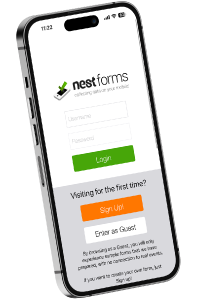
NestForms helps field teams capture these records digitally while work is taking place, including photographs, signatures, dates, locations and inspection details.
What Are Site Records?
Site records are the information collected while work is being carried out. They create a documented history of activities, inspections, decisions and completed tasks.
Depending on the type of project, a site record might include:
- Inspection results and completed checklists.
- Photographs of work or defects.
- Dates and times of visits.
- GPS locations.
- Measurements and observations.
- Snags and corrective actions.
- Client or supervisor signatures.
- Completion and handover information.
Individually, these details may seem routine. Together, they can provide valuable evidence if something is questioned later.
Why Do Site Records Become Important When Problems Arise?
Good site records replace assumptions with evidence.
Imagine an installer completes work at a property. Several weeks later, damage is reported and there is disagreement about whether it existed before the installation.
Without photographs or inspection records, establishing what happened can be difficult.
If the installer captured timestamped images and completed an inspection form before starting work, there is a much clearer record of the property's original condition.
The same principle applies to snagging, safety inspections, maintenance visits and project handovers.
A reliable record can answer basic but important questions:
- What condition was the site in?
- What work was completed?
- When was it completed?
- Who carried out the work?
- Were any defects identified?
- What corrective work was requested?
- Was the work inspected or approved?
- Was client sign-off obtained?
The sooner these questions can be answered, the easier it becomes to establish what actually happened.
How Can Site Records Help Prevent Disputes?
Site records do not guarantee that disagreements will never occur. They do, however, make disagreements easier to investigate.
Consider a snag identified during a final inspection.
The contractor believes it was repaired. The client believes it was never addressed.
If the only record is an email or handwritten note stating "snag completed", there is little supporting evidence.
A stronger record could contain the original defect photograph, repair details, a second photograph after completion, the completion date and an inspector's approval.
That creates a simple evidence trail.
Instead of relying on two different recollections, both parties can refer to the same information.
Why Are Photographs So Valuable?
Photographs provide visual evidence that written descriptions cannot always match.
A note saying "wall damaged before installation" leaves room for interpretation. A photograph showing the wall immediately before work began provides much stronger context.
Images can be particularly useful for recording:
- Existing damage.
- Installation conditions.
- Snags and defects.
- Safety hazards.
- Completed repairs.
- Equipment condition.
- Work before areas are covered or closed.
- Final project condition.
The important point is context. A folder containing hundreds of unidentified photographs may still be difficult to use.
Images are far more valuable when they are connected directly to the relevant inspection, job, location or form response.

Can Sign-Off Records Protect Both Sides?
Client and supervisor sign-offs provide another useful layer of evidence.
A signature can confirm that an inspection was completed, work was reviewed or a particular stage was accepted.
This does not mean every signature removes future responsibility. It simply creates a clearer record of the process followed at that point in the project.
For example, a project completion form might record completed work, outstanding issues, photographs and client sign-off together.
If a question arises later, everyone has a common reference point.
What Happens When Records Are Incomplete?
Poor records often become a problem at exactly the wrong time.
A missing photograph may not seem important on the day. Six months later, it could be the only evidence capable of establishing the condition of a particular area.
Common record-keeping problems include:
- Paper forms going missing.
- Photographs remaining on individual phones.
- Incomplete inspection details.
- Missing dates or signatures.
- Different versions of the same document.
- Information being entered days after the site visit.
- Records stored across emails, folders and spreadsheets.
These gaps make it harder to reconstruct events accurately.
They also consume time. Managers may need to contact workers, search old emails or compare different documents simply to establish basic facts.
Why Should Records Be Captured While Work Is Happening?
The most useful site records are generally created at the point of work.
Details are fresh. The worker is physically present. Photographs can be taken immediately, and measurements or observations can be recorded before moving on.
Waiting until the end of the day increases the risk of missing information.
A mobile form builder app such as NestForms allows teams to complete structured forms directly from a phone or tablet. Where connectivity is unreliable, forms can also be completed offline and synchronised later.
This can be particularly useful on construction sites, remote locations and properties where mobile coverage is inconsistent.
How Do Consistent Forms Improve Site Records?
Consistency matters when multiple workers are collecting information.
If every worker records jobs differently, comparing records becomes difficult. One person may take photographs, another may write detailed notes, while someone else records only the minimum information.
A structured digital form can require the same essential information every time.
For example, an inspection might require:
- Site and project details.
- Inspection date.
- Inspector name.
- Condition photographs.
- Defects identified.
- Corrective action required.
- Completion photographs.
- Client or supervisor sign-off.
Required questions and Skip Logic can also help ensure the right information is requested according to the answers provided.
The result is a more consistent record across different sites and team members.
Site Records Are More Than Administration
Good record keeping is sometimes treated as paperwork that needs to be completed for compliance purposes.
Its practical value is much greater.
Site records create a history of the work. They help managers understand progress, support quality control and provide evidence when something is questioned.
They can also improve communication between contractors, inspectors, managers and clients because everyone is working from recorded information rather than recollection.
The real value often becomes apparent only when something goes wrong.
A photograph that took ten seconds to capture or a digital signature collected at handover can become extremely useful months later.
Build a Clearer Record of Every Job
Problems, defects and disagreements are part of managing field-based work. The quality of the records available can determine how difficult those problems are to resolve.
NestForms allows teams to create digital site records containing inspection answers, photographs, GPS details, signatures and other supporting information in one place.
Forms can be adapted to match existing inspection, snagging, installation or handover processes, helping teams collect consistent evidence without relying on paper records.
For organisations looking to improve how information is captured in the field, a structured digital record provides something simple but valuable: a clearer account of what actually happened.
Want to see how NestForms could fit your existing site processes? Book a free Training Demo and explore how digital forms can be adapted to your inspections, site records and reporting requirements.
At NestForms we offer a free Training Demo as an introduction to the platform if you need it. For larger operations we also provide more detailed Assisted Onboarding.
Start your NestForms journey today and sign up for the free two week trial. You can review and test all of the features available to Premium plan users during this period.